

TL;DR:
- Smart safety gear uses sensors and connectivity to detect hazards and alert cyclists before accidents happen. It reduces injuries by combining real-time crash detection, biometric monitoring, and environmental data collection, enhancing safety and performance. However, adopting such gear involves higher costs, ongoing maintenance, and privacy considerations that riders must carefully evaluate.
Smart safety gear is wearable equipment embedded with sensors and connectivity that actively reduces accident risk, tracks performance, and improves situational awareness for cyclists. The impact of smart safety gear goes well beyond a helmet or a reflector. Connected technologies now shift protection from reactive to proactive, meaning your gear responds to threats before an injury occurs. Research confirms that IoT-enabled safety gear produces a 30% reduction in recordable injuries in high-risk environments. That number signals a fundamental change in what safety equipment can do for riders on any terrain.
How does smart safety gear improve cycling safety?
Smart safety gear improves cycling safety by detecting hazards in real time and triggering alerts before a situation becomes critical. Traditional helmets and reflectors protect you after a crash. Connected gear works before and during one.
Embedded sensors and what they actually do
Modern smart helmets carry impact sensors, accelerometers, and gyroscopes. These components measure force, angle, and motion continuously while you ride. When a crash occurs, the helmet registers the event instantly. Smart helmets with GPS enable automatic crash detection and send instant alerts to emergency contacts, cutting response time in solo or remote riding situations. That matters most when you crash on a gravel trail at dawn with no one nearby.
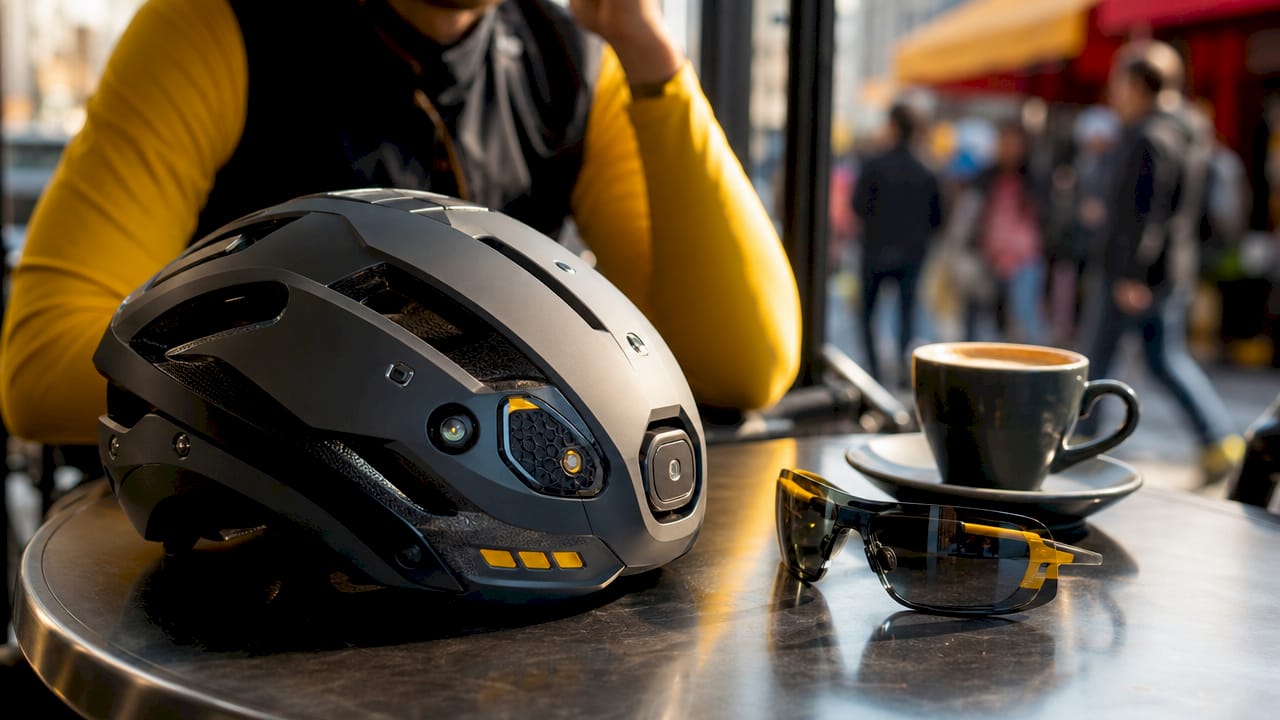
Biometric sensors add another layer. Heart rate monitors and fatigue indicators embedded in gear track your physiological state throughout a ride. Environmental sensors detect temperature extremes and air quality. Together, these data streams give you a real-time picture of both your body and your surroundings.
Connectivity features that close the safety loop
Bluetooth and NFC technology do more than stream music. Bluetooth-enabled smart gear stores medical information and emergency contacts accessible via smartphone, which means first responders get critical data immediately after an incident. Connected rearview mirrors extend your field of vision without requiring you to turn your head, reducing the risk of swerving into traffic. High-visibility smart reflectors adjust brightness based on ambient light, making you more visible to drivers in low-light conditions.
- Impact detection: Accelerometers measure crash force and trigger automatic SOS alerts
- GPS tracking: Location data reaches emergency contacts within seconds of a detected incident
- Biometric monitoring: Heart rate and fatigue sensors flag physical distress before it causes a lapse in control
- Environmental sensing: Temperature and air quality data inform route decisions in real time
- Smart visibility: Connected reflectors and mirrors improve rear awareness without breaking riding posture
Pro Tip: Set your emergency contact alert threshold in your helmet app before every long solo ride. A misconfigured sensitivity level can trigger false alarms or, worse, miss a real crash.
The role of smart sensors in cycling safety is now well documented. Cyclists who use connected helmets and accessories carry a measurable safety advantage over those relying on passive gear alone.
What are the performance benefits of smart safety gear for cyclists?
Smart safety gear improves performance by turning raw sensor data into feedback you can act on during and after a ride. Safety and performance are not separate goals. The data your gear collects serves both.
Four ways connected gear improves your riding
- Heart rate and fatigue tracking: Continuous biometric data shows when your effort exceeds a sustainable threshold. Cyclists and coaches use this to adjust pace before exhaustion sets in, not after.
- Environmental awareness: Temperature and air quality readings help you decide when to push and when to back off. Riding into poor air quality without knowing it accelerates fatigue and raises health risk.
- Situational awareness through smart mirrors: A connected rearview mirror gives you a constant view of traffic behind you. Riders who use rear-view mirrors report greater confidence in traffic, which translates to smoother, more controlled riding.
- Behavioral feedback loops: Some connected systems flag risky habits, such as sudden braking or erratic steering, and prompt corrections over time. This nudges you toward safer ergonomics without requiring a coach.
The wearable tech guide for 2026 covers how these feedback systems integrate with popular fitness apps, allowing cyclists to review ride data alongside training metrics.
Pro Tip: Review your biometric data from the last 10 minutes of a ride, not just the average. Fatigue spikes at the end of a ride are when most accidents happen, and the data will show you exactly when your control started to slip.
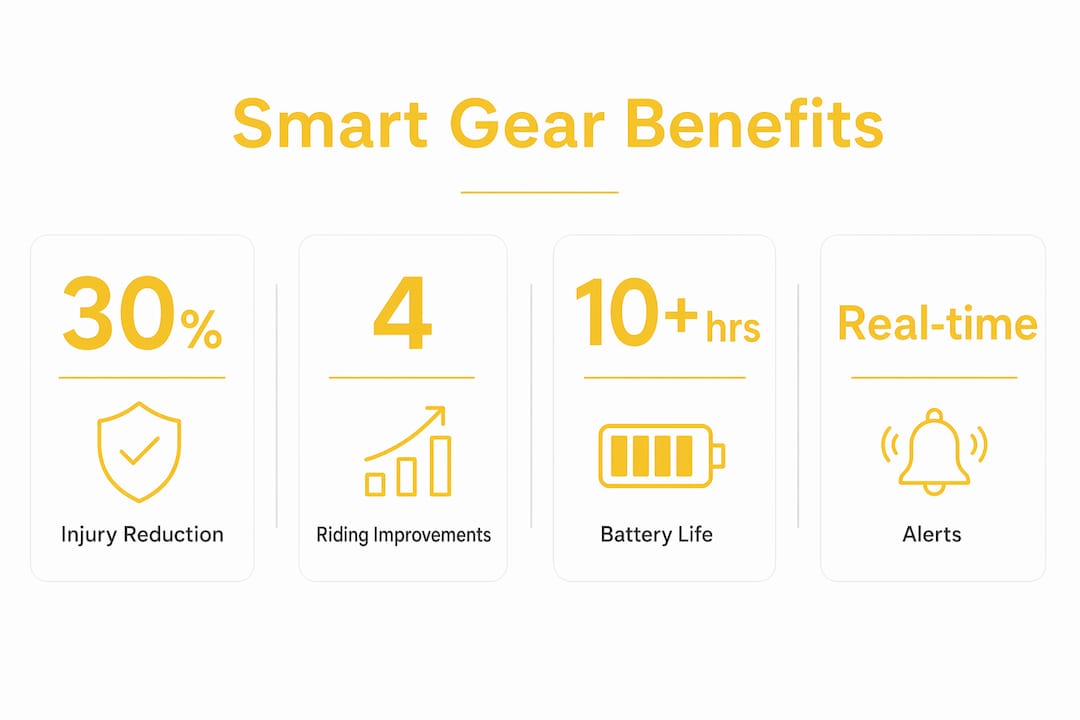
Smart safety gear shifts the safety model from reactive protection to proactive risk management. For cyclists, that means catching a dangerous pattern in your riding before it causes a fall, not after.
What are the costs and challenges of adopting smart safety gear?
Smart safety gear carries a real cost premium, and the financial barrier is only part of the picture. Understanding the full adoption challenge helps you make a better purchasing decision.
The price gap and what drives it
Smart PPE carries an average cost premium of $8 to $10 per unit compared to traditional equipment, driven by sensor hardware. For a full connected cycling setup, including a smart helmet, connected mirror, and smart reflectors, that premium compounds. Entry-level connected helmets typically cost significantly more than standard certified helmets at the same protection rating.
| Challenge | What it means for cyclists |
|---|---|
| Higher upfront cost | Sensor hardware adds $8–$10 per unit at minimum; full setups cost more |
| Software maintenance | Firmware updates and sensor calibration are ongoing requirements |
| False alert fatigue | Poorly calibrated sensors trigger unnecessary alerts, eroding trust |
| Privacy concerns | Location and biometric data ownership is often unclear |
| App dependency | Gear delivers limited value without a connected ecosystem |
Maintenance and privacy: the hidden barriers
Maintaining smart gear requires software updates, sensor calibration, and consistent attention to avoid false positives. Most cyclists underestimate this demand. A helmet that sends a false crash alert every third ride quickly loses credibility, and riders stop trusting the system entirely.
Privacy is a separate and serious concern. Data ownership transparency remains limited in many smart gear systems. Your physiological data and GPS location are valuable, and not every manufacturer is clear about who controls that information or how long it is stored.
- Read the privacy policy of any connected gear app before purchase
- Check whether data is stored locally or on third-party servers
- Confirm that firmware updates are free and supported for at least three years
- Test sensor sensitivity settings before relying on the gear in a real emergency
A review of 60 studies found that consistent evidence of sustained accident reduction from smart gear remains limited due to short-term trials. That does not mean the gear does not work. It means long-term data is still catching up with the technology.
How does smart safety gear fit into a cyclist’s daily routine?
Smart safety gear works best when it integrates into an existing ecosystem rather than operating as a standalone device. Raw sensor data has limited value without software that interprets it and delivers clear signals.
Building a connected safety ecosystem
Connected gear requires an app infrastructure to translate sensor readings into alerts and insights. Without that layer, a smart helmet is essentially a passive helmet with extra weight. Most connected cycling systems sync with platforms like Garmin Connect, Strava, or proprietary brand apps, allowing you to review crash events, route data, and biometric trends after each ride.
Compatibility matters before you buy. Confirm that your helmet, mirror, and reflectors communicate with the same app or platform. Fragmented ecosystems create friction and reduce the likelihood that you will use the gear consistently.
- Sync your gear before every ride, not just occasionally, to confirm sensor connectivity
- Set alert thresholds conservatively at first, then adjust based on your riding style
- Share incident data with your cycling group or club to build a local safety picture
- Use post-ride data reviews as a training tool, not just a safety check
- Keep firmware current; outdated software is the most common cause of false alerts
User acceptance of smart gear depends more on perceived comfort and safety gains than on concerns about monitoring. Cyclists who feel the gear genuinely improves their rides adopt it consistently. Those who experience friction, whether from poor app design or unreliable alerts, abandon it quickly.
The connected helmets guide from Thebeamofficial covers how to evaluate compatibility between smart helmet systems and the accessories you already own.
Key takeaways
Smart safety gear delivers measurable safety gains and performance insights, but only when cyclists choose well-maintained, privacy-transparent systems that integrate into a connected ecosystem.
| Point | Details |
|---|---|
| Proactive protection | Smart gear detects hazards and triggers alerts before injuries occur, not after. |
| Injury reduction evidence | IoT-enabled gear produced a 30% drop in recordable injuries in high-risk settings. |
| Performance feedback | Biometric and environmental data help cyclists optimize effort and avoid fatigue-related accidents. |
| Real adoption costs | Expect a cost premium on hardware plus ongoing maintenance demands for software and sensors. |
| Privacy due diligence | Confirm data ownership policies before purchasing any connected cycling gear. |
Why the shift to proactive safety is the most important change in cycling gear
I have spent years watching cyclists treat safety gear as an afterthought, something you grab off the shelf because regulations or common sense require it. Smart gear changes that calculus entirely, and I think most riders still underestimate how significant that shift is.
The move from reactive to proactive protection is not a marketing phrase. It is a structural change in how your equipment relates to risk. A standard helmet absorbs impact after a crash. A connected helmet detects the crash, alerts your contacts, and logs the event for review. Those are fundamentally different tools, even if they look similar on your head.
That said, I have seen riders buy expensive connected gear and then ignore the app, skip firmware updates, and wonder why the system feels unreliable. The technology is only as good as the habit you build around it. Treat your smart gear like a training tool, not a set-and-forget accessory.
Privacy is the issue I wish more cyclists asked about before buying. Your location and heart rate data are genuinely sensitive. Read the terms before you sync. The long-term value of smart safety gear is real, but it requires you to stay engaged with the system, not just wear it.
— Sophie
Thebeamofficial’s smart cycling accessories for real-world safety
Thebeamofficial designs safety accessories built for cyclists who take protection seriously without sacrificing style or usability.
The CORKY rearview mirror gives you a clear, stable view of traffic behind you without turning your head, a simple addition that meaningfully improves situational awareness on busy roads. Paired with the FRAME FLASH reflectors, which deliver high-visibility coverage in a minimal profile, you build a connected visibility layer that works in any light condition. Both products are designed to integrate into a broader smart safety setup, complementing connected helmets and fitness apps that cyclists already use. Thebeamofficial ships internationally, with strong availability across France, the U.S., and Germany.
FAQ
What is smart safety gear for cyclists?
Smart safety gear is wearable cycling equipment embedded with sensors, GPS, and connectivity that actively monitors your safety and performance in real time. It includes connected helmets, smart mirrors, and high-visibility reflectors that communicate with apps or emergency contacts.
How does smart safety gear reduce injury risk?
IoT-enabled smart gear has produced a 30% reduction in recordable injuries in high-risk environments by detecting incidents instantly and triggering emergency alerts. For cyclists, crash detection and automatic SOS features are the primary injury-reduction mechanisms.
Is smart safety gear worth the extra cost?
Smart gear carries a cost premium driven by sensor hardware, but the long-term value in injury prevention and performance feedback justifies the investment for regular riders. The key is choosing gear with transparent privacy policies and reliable app support.
What are the biggest barriers to adopting smart cycling gear?
The main barriers are upfront cost, ongoing maintenance requirements like firmware updates and sensor calibration, and privacy concerns around data ownership. Riders who understand these demands before purchasing are far more likely to use the gear consistently.
How do I integrate smart safety gear into my existing cycling setup?
Confirm that your helmet, mirror, and reflectors are compatible with the same app or platform before buying. Sync all devices before each ride, keep firmware current, and review your post-ride data regularly to get full value from the system.


